Analyze a covered call
A covered call adds one decision to shares you own: which call to sell against them. In this tutorial you’ll build one in Trade analysis, value it at the call’s expiration, read what it risks and returns, and see what a higher strike changes.
You don’t need an account, or shares, to try this: Trade analysis models the position on delayed data. The screenshots follow a covered call on XLF, the Financial Select Sector SPDR Fund, about five weeks from expiration. It’s an illustration, not a recommendation.
1. Open Trade analysis
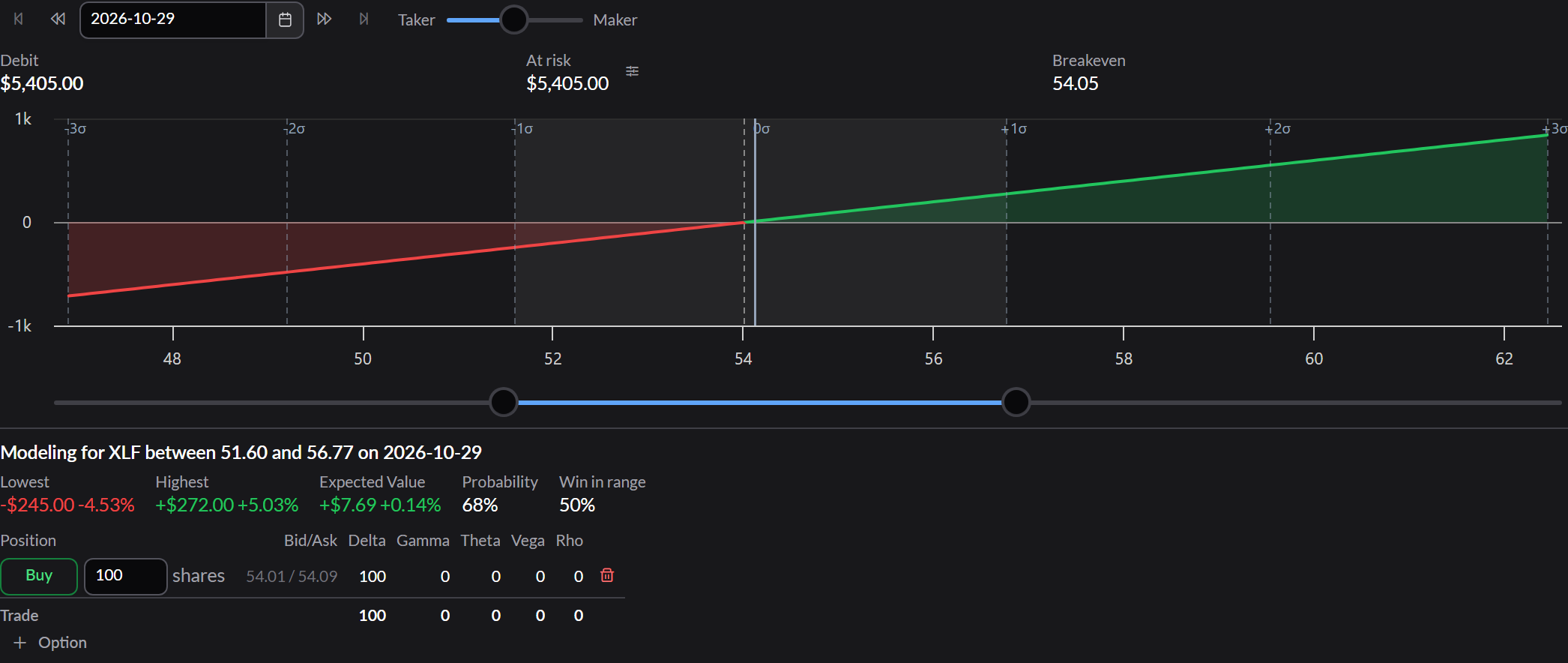
Select Stocks & Options in the left-hand menu, search for the symbol, and open its page. Then select the Analyze tab. It opens with 100 shares, which is the first half of a covered call.
2. Add the call
- Select + Option below the legs table.
- On the new row, select Buy to switch it to Sell. Leave it on Call. The quantity is already 1, which covers the 100 shares.
- Pick an Expiration about 30 to 45 days out, then a Strike above the current price.
- Read the row’s Delta. It shows the position’s delta per 100 shares, so a short call whose contract delta is 0.30 reads about −30. Try strikes until it’s near −30.
- Set the date above the chart to the call’s expiration: select the next-expiration button to the right of the date, or pick it in the calendar, where expiration dates are marked.
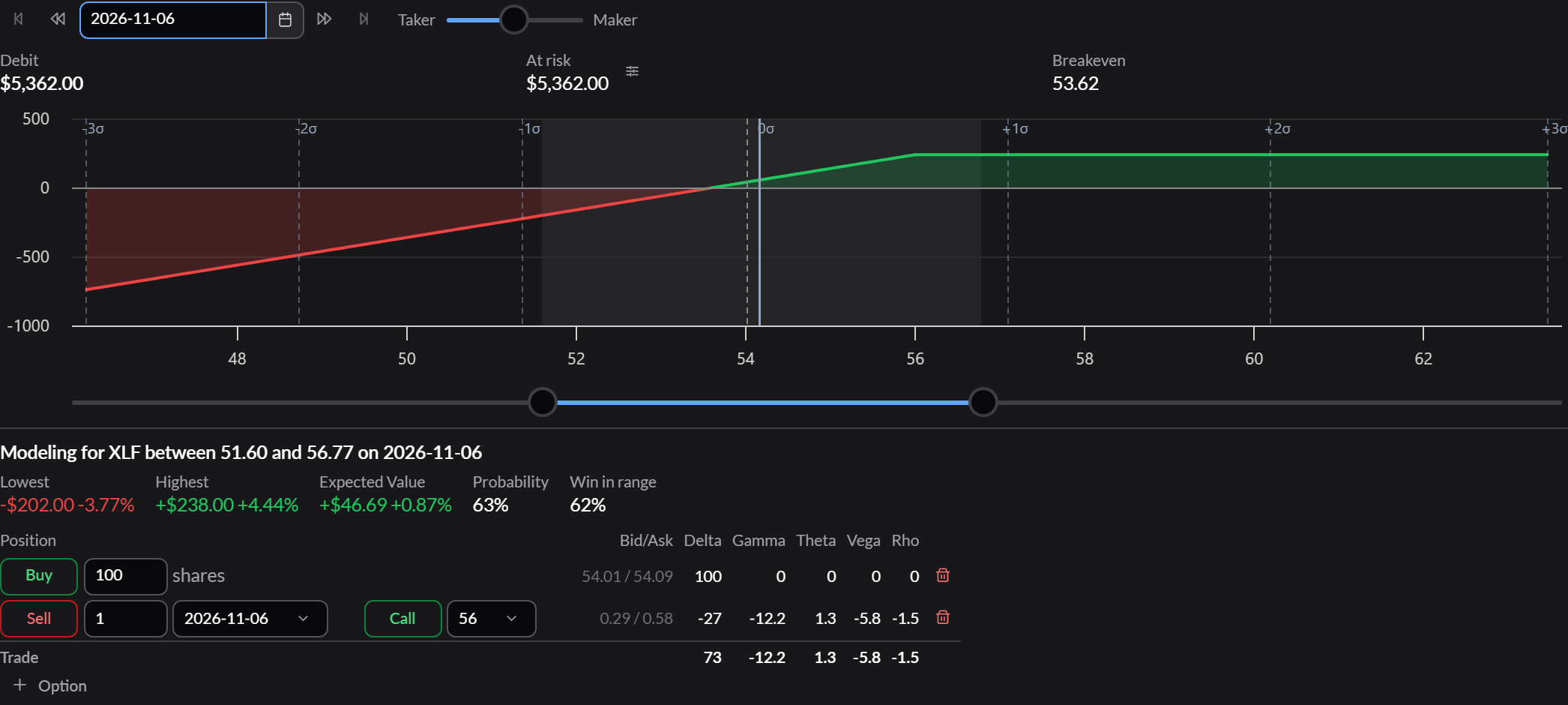
The chart is the covered call’s shape: rising with the shares up to the strike, then flat, because above the strike the shares are called away.
3. Widen the forecast
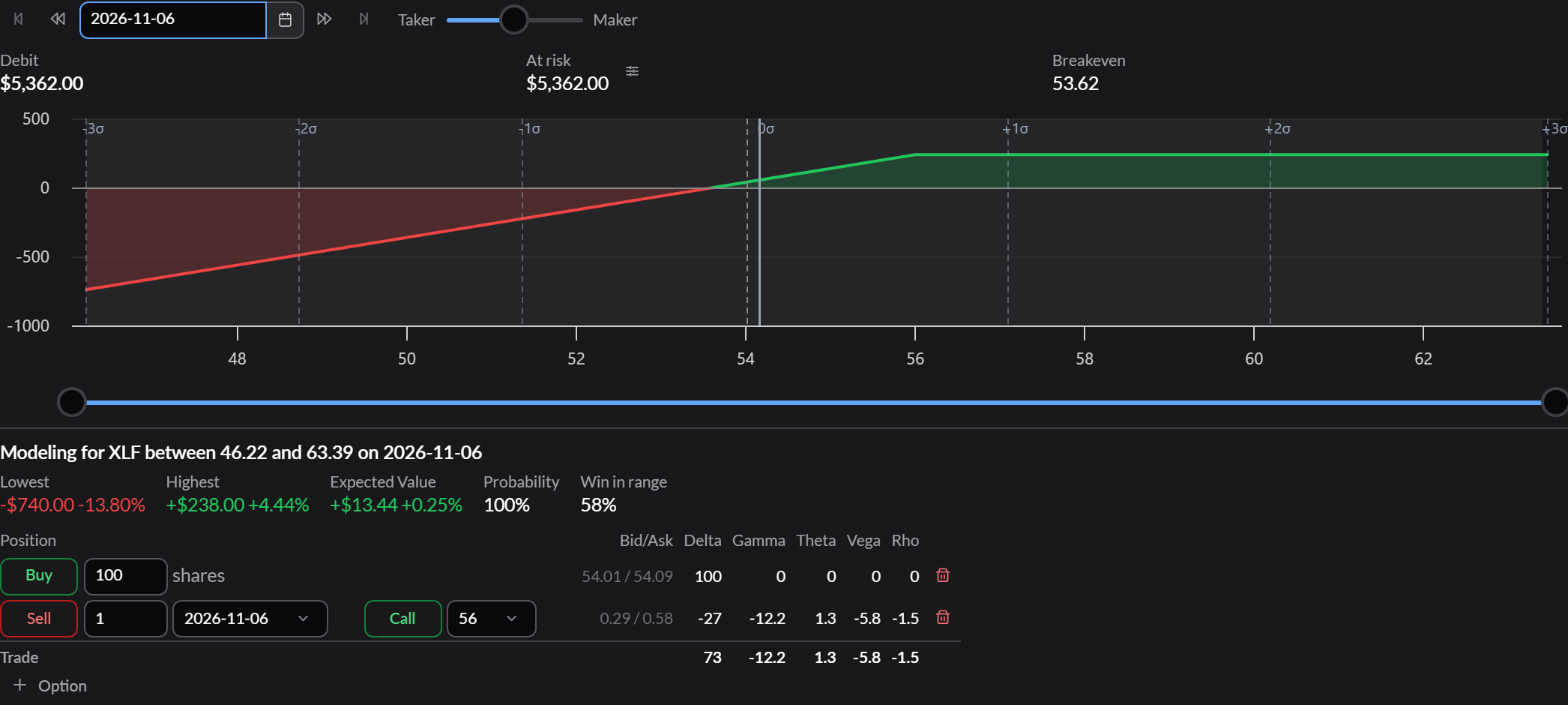
Drag both ends of the forecast range under the chart out to the ends of its track, so Probability, under Modeling for…, reaches nearly 100%. Win in range is then, in effect, the chance the position makes money at all. How Qwidgets estimates the chance of profit explains why.
4. Read the trade
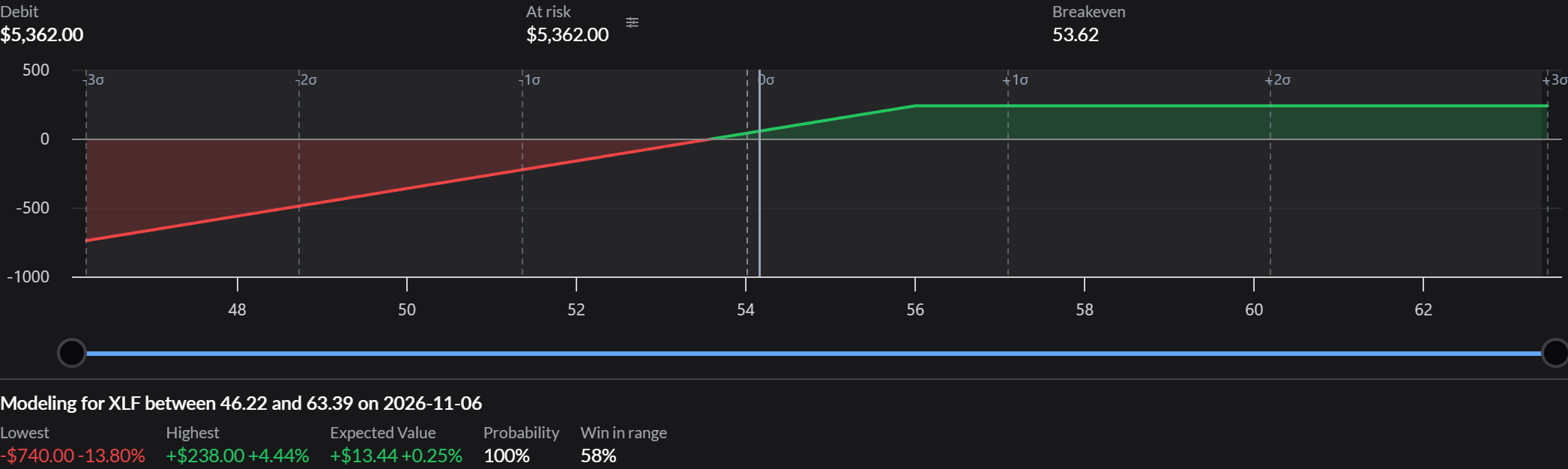
- Debit is what the position costs: the shares, less the premium the call pays.
- At risk is the most it can lose, if the shares went to zero: the same debit. The call doesn’t reduce the risk beyond its premium.
- Breakeven is today’s price less the premium per share (and any dividend due before expiration), at expiration.
- Highest is the most the position can make: the gain up to the strike, plus the premium. Rises past the strike don’t add to it.
5. Try a higher strike
Pick a Strike two or three steps higher.
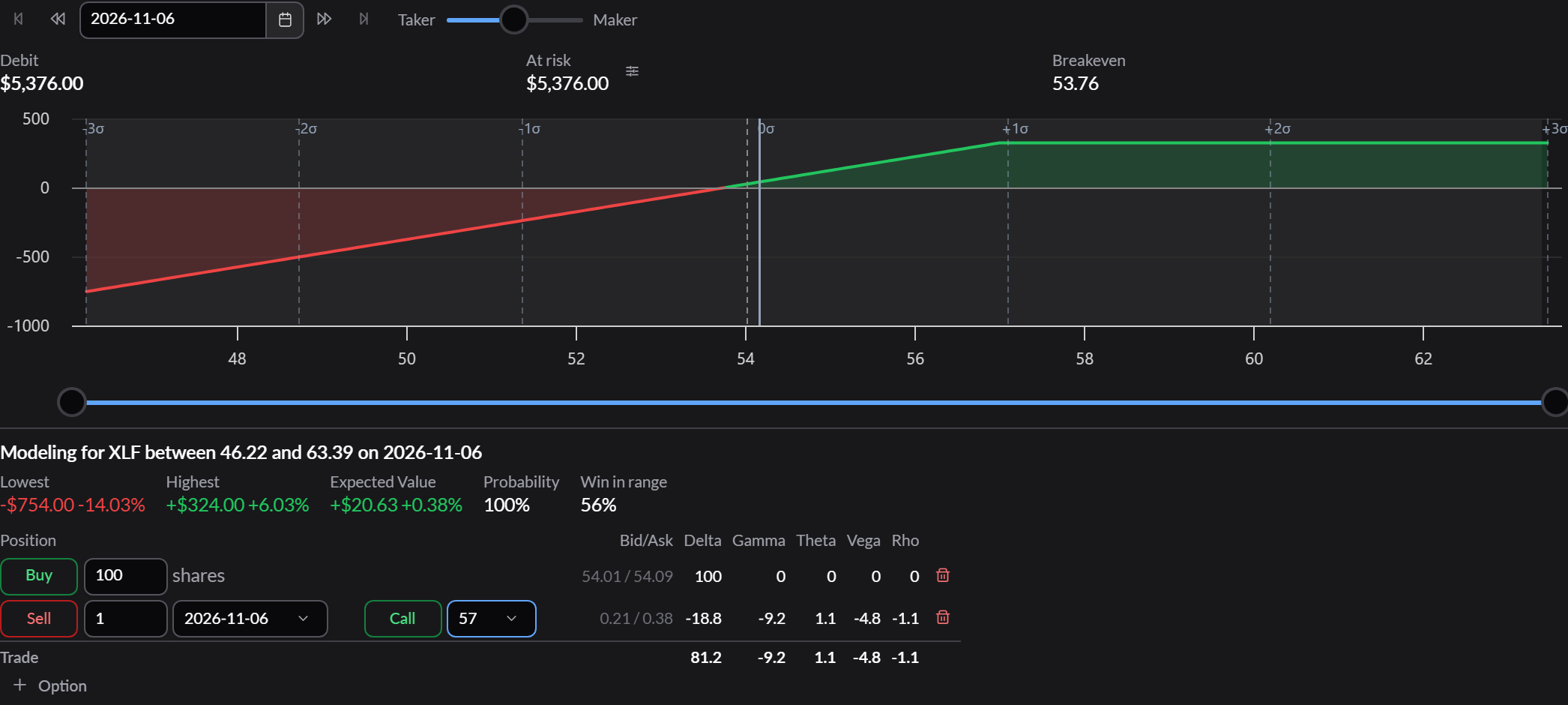
The call pays less, so the debit rises and the breakeven with it. The flat part of the chart starts further out, so you keep more of a rally. That’s the trade-off behind every covered call: more premium now, or more room to rise. Choosing strikes and expirations looks at it in more depth.
What’s next
- Trade analysis: every setting on the page.
- Disclosures & Model Limits: these are models, not forecasts, and not investment advice.